Greek
Clay House.
Traditional Mediterranean dwelling built from stone, clay and timber. Designed around local materials, passive cooling and a lifespan measured in generations.
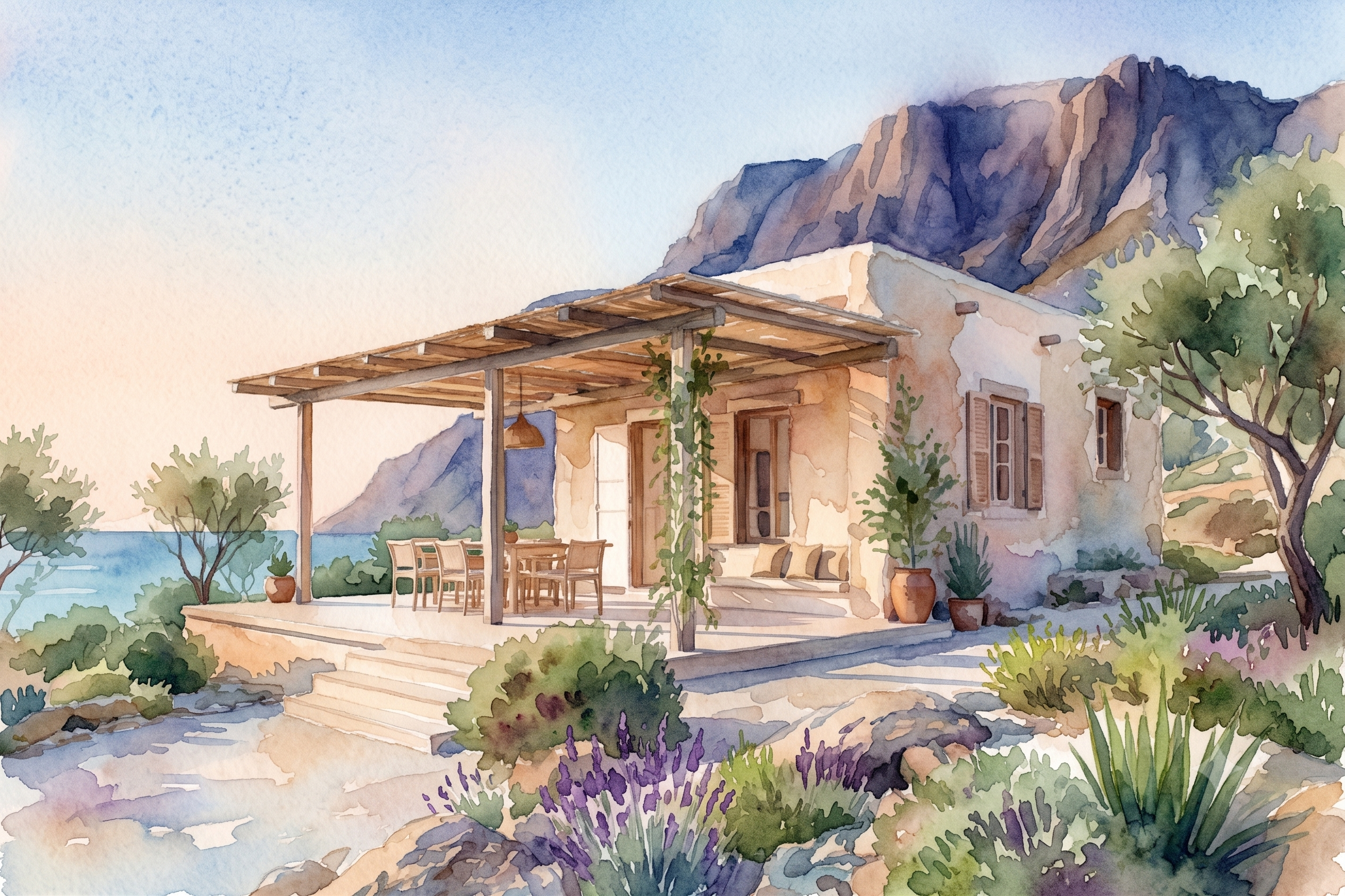
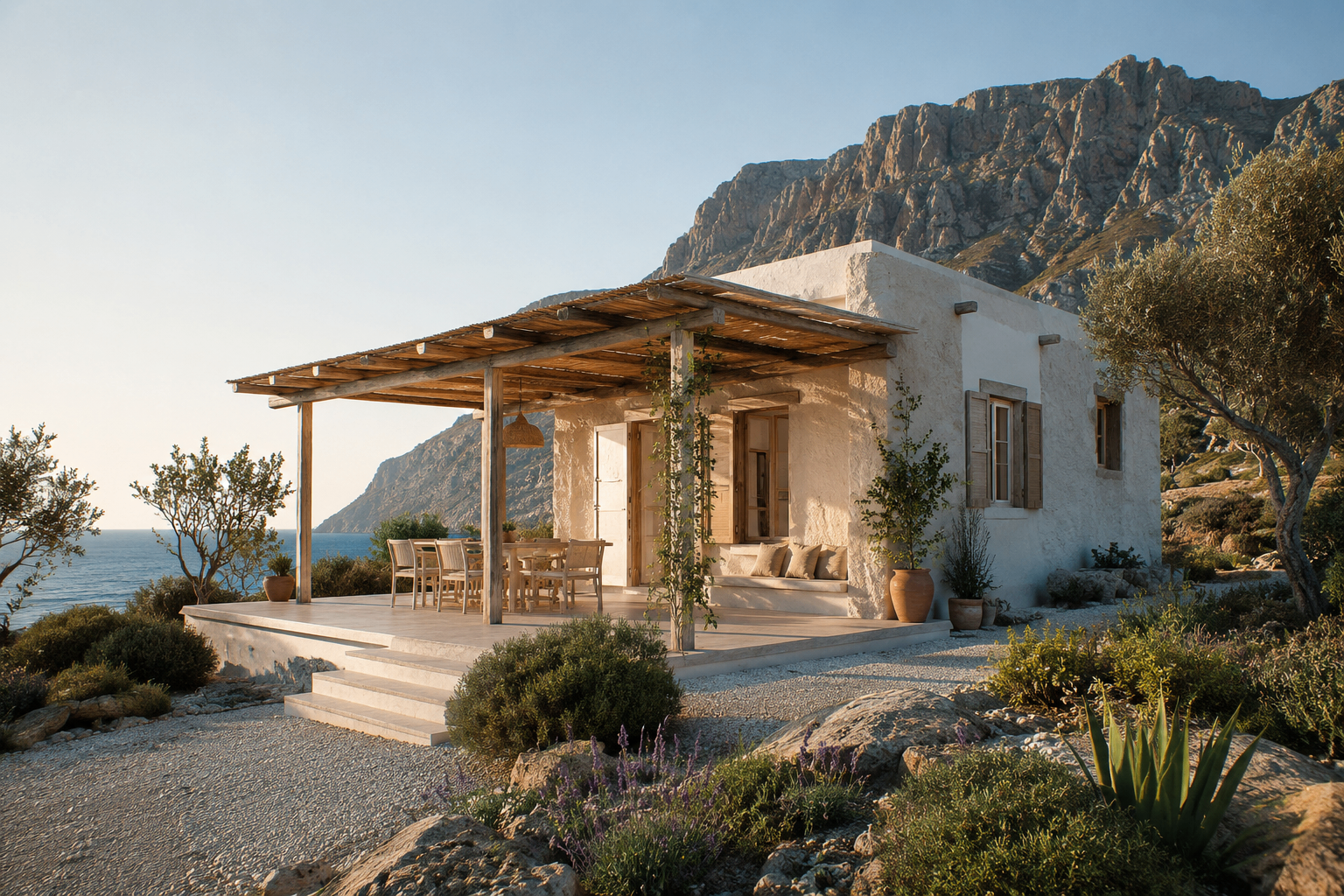
Greek Clay House is a contemporary interpretation of traditional Mediterranean construction. The concept combines stone foundations, clay walls and timber structures into a building designed specifically for the Greek climate.
The objective is simple: use local resources, reduce complexity and create buildings that age gracefully rather than become obsolete.
Natural Clay Construction
Hand-built earthen walls — breathable, repairable, returning to the land at end of life.
Passive Cooling
Thermal mass, cross-ventilation and shaded thresholds — comfort without compressors.
Local Materials
Stone, clay and timber sourced within walking distance of the site.
Off-Grid Ready
Designed for autonomy — solar, rainwater and storage integrated from day one.
Sustainable Water
Cisterns, greywater loops and drip systems — every drop measured, every drop returned.
Mediterranean Craftsmanship
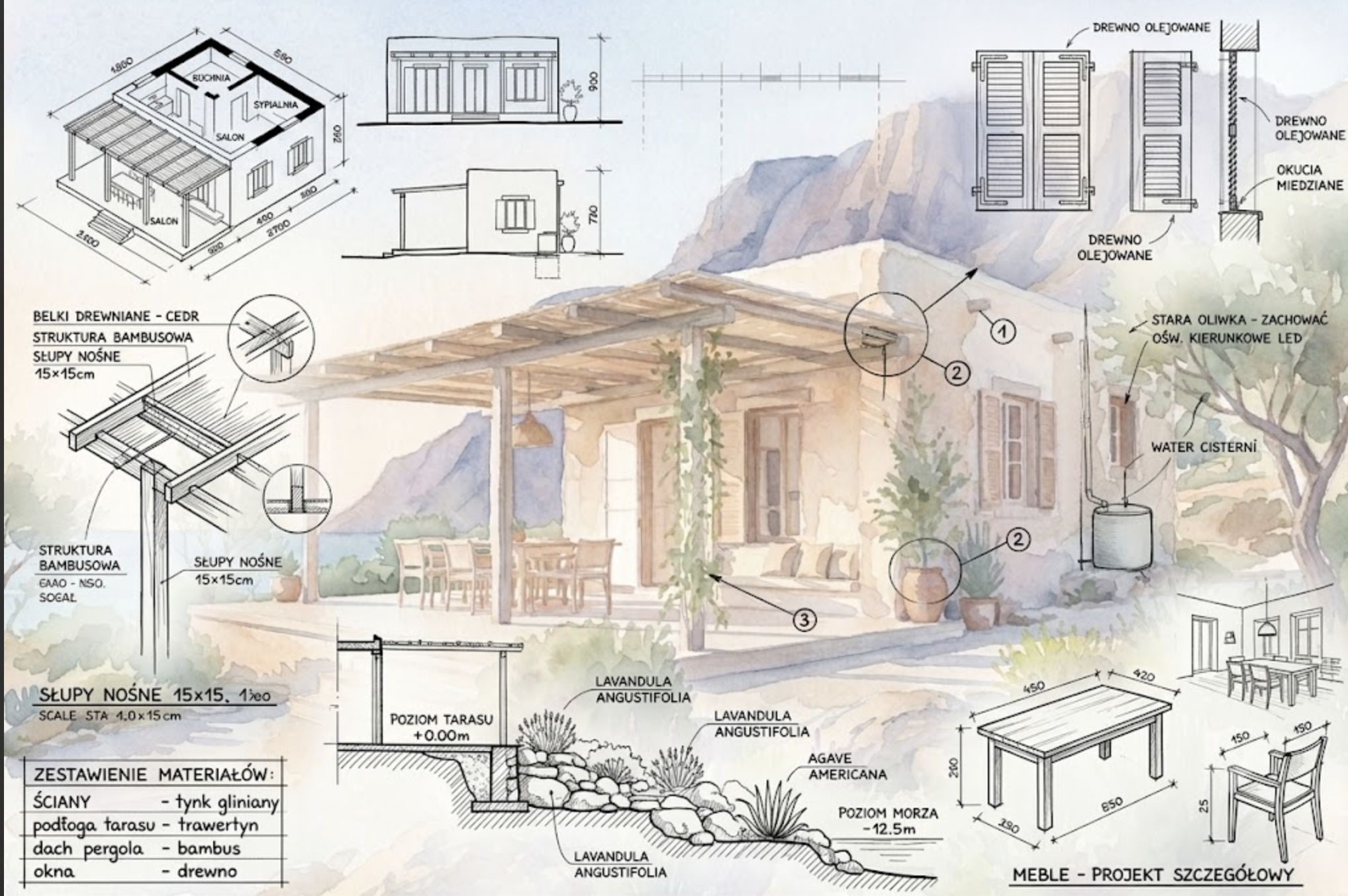
Techniques refined over centuries — lime washes, dry stone, timber joinery without fixings.
Dry stone footing — hand-laid local granite.
Stone base · clay body · lime finish.
Stone
Used for foundations, retaining walls and thermal mass.
Clay
Locally sourced earth mixed with sand and natural fibres. Provides humidity regulation and exceptional thermal performance.
Timber
Locally available pine, cypress or chestnut used for roof structures, pergolas and joinery.
Lime
Traditional lime finishes allowing walls to breathe naturally.
Cypress timber — open rafters, no fixings beyond joinery.
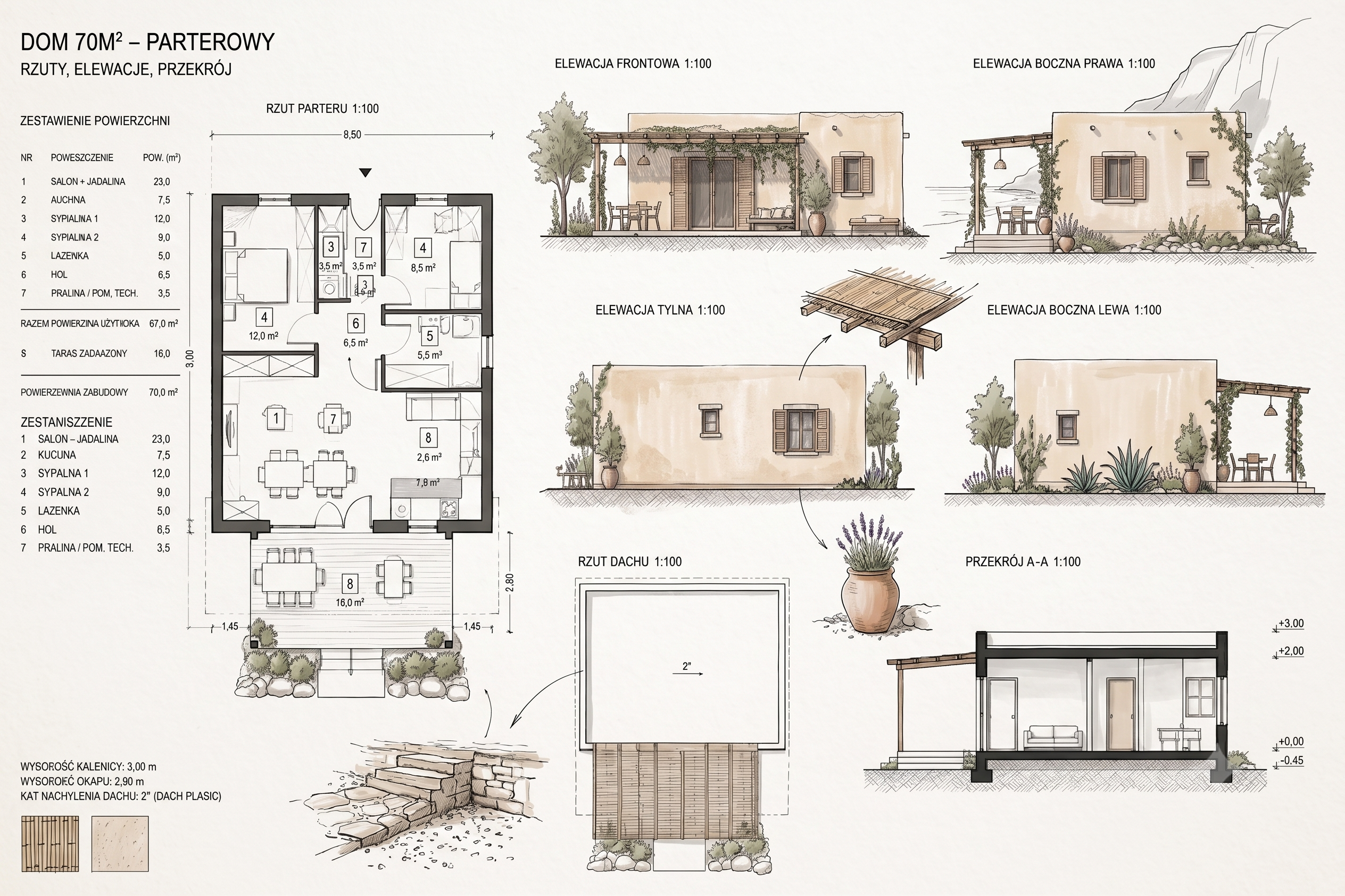
Approx. 50 m². Four spaces, two thresholds.
Quiet engineering.
- Passive coolingP.01
- Thermal massP.02
- Natural ventilationP.03
- Minimal mechanical systemsP.04
- Off-grid compatibleP.05
- Low embodied energyP.06
Cross-section — low intake, high release. No fans.
Stone core, clay body, breathable lime finish.
Properly built clay and stone structures routinely survive for generations.
Maintenance requirements remain simple and rely on locally available materials and skills.
Build with the landscape, not against it.
Instead of importing industrial systems, the project relies on techniques refined over centuries throughout the Mediterranean basin.
Concept developed.
Pilot construction planned in Greece.